A little over 100 years ago, President Woodrow Wilson and his administration admonished Americans to grow their own gardens to support the war effort. In 1914, at the beginning of WW I, food rationing was a real thing. The food shortage in Europe became dire rather quickly, and America became the world’s leading seed supplier. (https://library.si.edu/exhibition/cultivating-americas-gardens/gardening-for-the-common-good) The American government encouraged her citizens to plant their own gardens AND to save the resultant seeds from crops for replanting or redistribution to our European brethren.
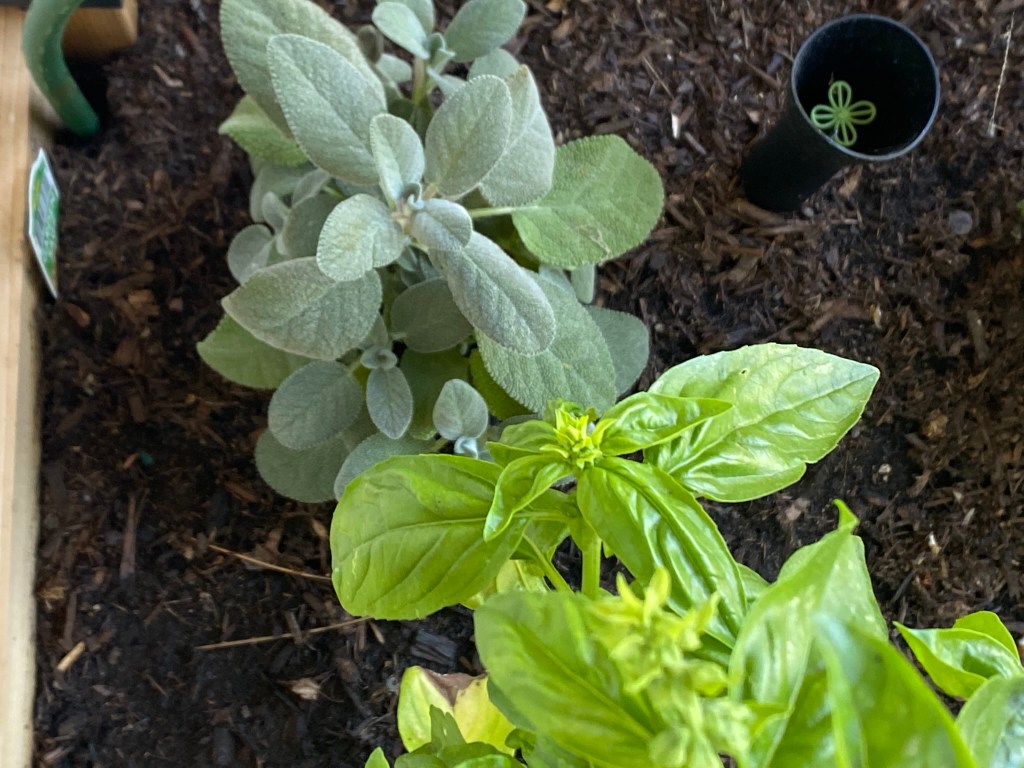
Originally referred to as, “War Gardens” or “Liberty Gardens,” eventually these small individually-tended gardens became known by the more uplifting moniker, “Victory Gardens.” It was considered a patriotic duty to grow fruits and vegetables in whatever space you had to do so. I believe my grams also had chickens, as do I now.
In our modern world filled with “supermarkets” that we take for granted, it’s sometimes difficult to connect with the notion that in a time of war when the government had to divert significant funds to the war effort–tanks, planes, ships, ammunition, soldiers, and all that that entails–what got left behind was food production. So, in addition to only receiving small rations of food each week, citizens cultivated their own food to supplement.
One very import point I’ll state now and return to later is that those who gardened saved their seeds, carefully drying them and keeping them in well-marked jars for the following year. That was a small thing then. It’s a big problem now. Another note to consider is that, unlike the recent COVID pandemic when people strongly vocalized their UNWILLINGNESS to cooperate and follow governmental guidance, in the early to mid 1900’s people considered growing their own food a patriotic duty, and most able-bodied people pitched in.
About a year-and-a-half into America’s involvement in WW II, Victory Gardens sprung up once more. Even Eleanor Roosevelt herself had one planted in the White House front lawn in solidarity with American citizens. President Roosevelt and First Lady Eleanor, as a side note, insisted on consuming sparse meals during wartime, once again showing leadership and solidarity with the people he led.
Victory Gardens served another purpose: national unity. It was a topic of conversation, an accomplishment. People were incredibly proud of their gardens–and grateful for them. They traded produce for variety. It was the most healthy, uplifting thing they could have done in a time of war, and it got them through it.
In the last hundred or so years, there have been three times when market shelves were empty: World War I, World War II, and COVID. During WW I and WW II, the government made a concerted effort not only to encourage people to grow their own food, but to educate them on how to do it. They produced circulars and informational pamphlets. Newspapers and magazines frequently offered tips and tricks for a prosperous garden, or what to plant if all you had were a few little planting boxes of space.
No such effort was made during COVID in America. In fact, what I found alarming was the amount of time government officials (I’m NOT talking about the CDC, but the administration and some members of Congress) spent spreading utterly ridiculous conspiracy theories and lies that did nothing but put Americans in more danger and divide the country. Fortunately, we survived that episode.
What I see lining up now is a confluence of circumstances, some of which mirror WW II, and some that reflect COVID. We have supply chain interruptions that have already hit gas prices and will soon hit food prices (diesel is expensive now thanks to the war in Iran and that is how crops are sown and food is delivered to stores), cause food shortages (fertilizer is another commodity stuck in the Straight or Hormuz), and cause a ripple effect of other issues. We now also have ammunition shortages that require diversion of government funds to replenish, troop deployments spreading us thin, and tariffs that are slowly reducing imports, as well as squandering the average American’s household budget margin.
With regard to tariffs, what is practically happening is importers are realizing some things now make no economic sense to import, resulting in fewer choices or no choices at all. Global economic trade and growth is now decelerating (https://www.weforum.org/stories/2026/05/unctad-predicts-a-dip-in-trade-volumes-and-other-international-trade-stories-to-know-this-month/), in 2025 the Trump Tariffs cost the average American household an additional $1000, and are predicted to cost an additional $700 in 2026. We frankly don’t know where we are headed after that. We are in a new era now.
We don’t know when or how this war in Iran will end, nor are we certain he-who-shall-not-be-named won’t start another war elsewhere. We can’t predict what is going to happen. But we can do some things.
A few steps we can take include building a pantry of shelf-stable goods and rotating through them, keeping plenty of water on hand, ensuring we have adequate first aide available including OTC meds we routinely consume, stocking vitamins, having some form of back up energy, and, oh yeah, a GARDEN.
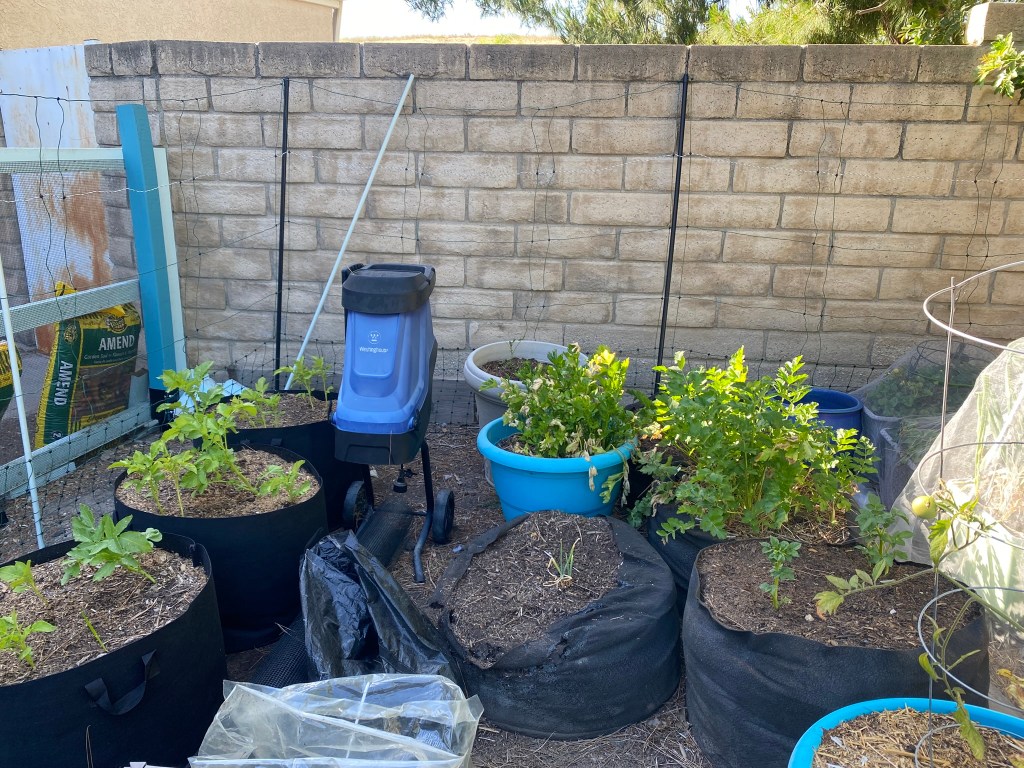
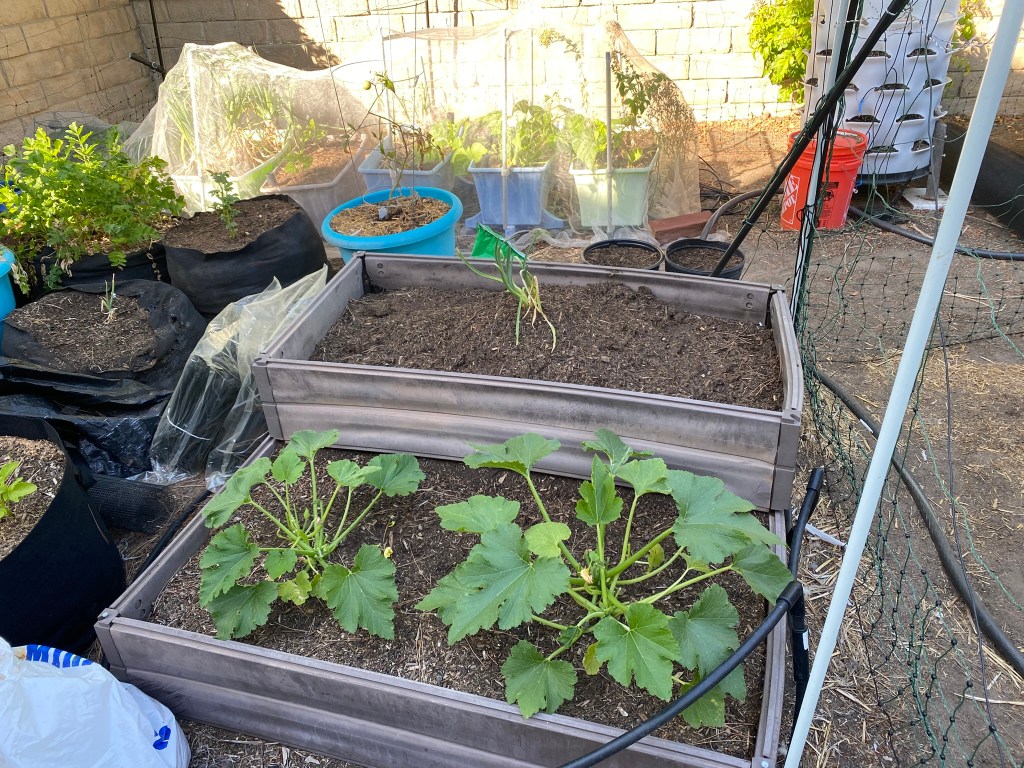
I’ll be honest, I’ve started and stopped this project multiple times. Last year I got serious and built my own 20′ x 25′ fence around one area of my yard, revitalized some raised beds and voila! Garden. I also NEVER ate one of last year’s tomatoes or strawberries. Squirrels, birds and other vermin got to them first. But I got plenty of zucchini, squash, garlic, onions, green beans, lettuce, carrots, potatoes, herbs and other fun stuff.
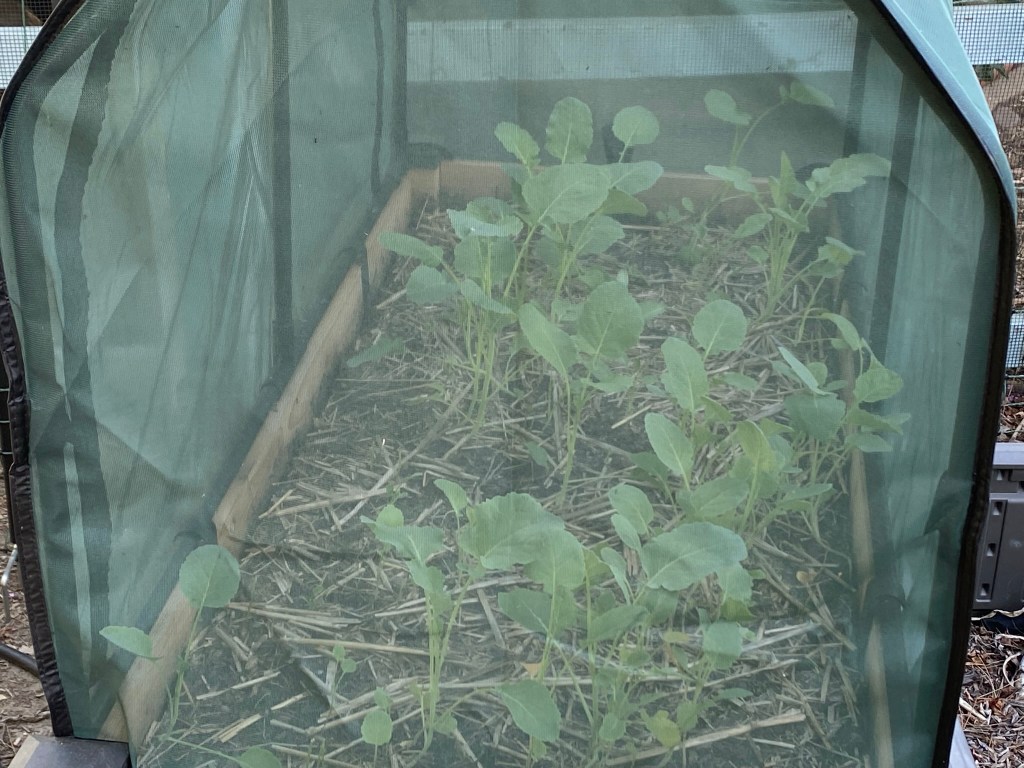
This year, I put up a battery-powered (solar recharged) electric netting around my garden. It’s been somewhat helpful. What was really helpful were the elevated 3′ high cedar self-watering beds with tightly-woven bird/bug netting that I literally tacked down with thumb tacks. Now I have thriving spinach, broccoli, cherry tomatoes and a couple of strawberry plants that the monsters have yet to assail. I’ve got green bush beans that are coming in nicely and also covered by netting, potatoes, parsnips, onions, garlic, herbs and zucchini–but it was just assaulted by…something.
I’ve said all that to say a garden is work, and it’s a learning curve. I am constantly trying to stay ahead of the critters who believe (often rightly) that the spoils are theirs. If you haven’t started one yet, figure out what you can start now in your climate zone and get going. Be persistent. You will have failures. You will curse at the weather. You will contemplate how you are going to set up a squirrel’s appointment with Jesus with a shotgun (that’s one of my favorite lines from an incensed Reddit redneck). But keep going. You WILL have successes.
Now, back to the seed part. Put simply: buy heirloom seeds. Here’s why: hybrid seeds–a combination of two or more genetic lines–produce fruit that if you save those seeds and replant them, they either will not grow, or they will grow in a defunct and/or far less than optimal manner. GMO seeds, unlike hybrids, are genetically altered in labs and optimized for all kinds of things. Some of them produce fruit that is seedless, or produce crops that unless you use their specific brand of fertilizer or their specific brand of insect deterrent they will not grow or they will be decimated by insects. And that is just a fraction of examples of ludicrous shit these companies do to make money. Oh, not to mention, they patent seeds now, so even if you or farmers CAN grow food from the seeds of resultant produce, it is ILLEGAL to do so. It is literally a patent violation prosecutable by law. Don’t get me started on the moral turpitude of that concept.
Heirloom seeds are literally ancient. And you can reuse the seeds from the resultant produce to replant the following season. That is how our ancestors did it. That is how we should do it. Also, those “expiration dates” on seed packets are often a lie that encourage you to throw out perfectly good seeds and buy again the following season. If you aren’t sure, get one of those mini indoor greenhouse starter kits with LED lights and plant old seeds around January or February. If they sprout in a couple of weeks or less, you’re golden. If not, you still have time to purchase more and begin again.
We live in uncertain times. Growing a garden is not only a decent backstop, it is an expression of hope. We could use more of that in these trying times. Get growing!


Leave a Reply